
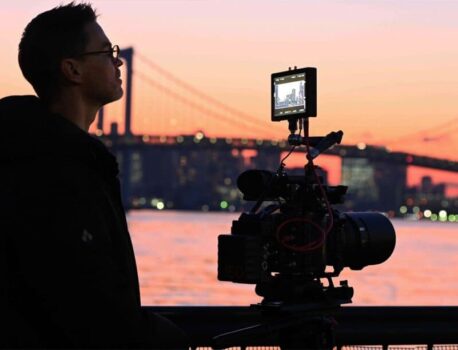

Modern documentary filmmaking has become more accessible due to technological advancements. Now, a single person can handle an entire project, from filming to editing, thanks to lightweight cameras, portable sound, and simple editing. This isn’t merely a cost-cutting measure but a way to approach reality without disturbing it with one’s presence and to follow the natural rhythm of life.
Solo documentarians, working this way, intervene less, observe more, and reshoot less. This gives their work a special sincerity and intensity that sets it apart from staged television films. This trend has already transformed documentary filmmaking and continues to influence the entire film industry.
Сamera as an extension of surveillance
One of the most famous examples of a solo approach is Agnès Varda’s late-career work. In The Gatherers and the Gatherer (2000), she used a digital camera to record chance finds, people, and her own thoughts. The camera here doesn’t subjugate reality but follows it, allowing chance occurrences to become part of the film’s structure.
Joshua Oppenheimer followed a similar path when working on The Act of Killing and The Look of Silence. Although the projects were large, many of the observational scenes were built around a minimal crew and the director’s extended personal presence. This allowed the characters to reveal themselves in situations where a traditional film crew simply wouldn’t have worked.
Today, solo directors often use compact cameras like the Sony FX3 or Canon C70, or mirrorless models, because the ability to be “invisible” is more important. This approach is relevant not only to arthouse cinema and online documentaries, but also to commercial digital platforms, including projects for Swiss Online Casino mit Echtgeld. In this context, small, unobtrusive cameras are often used to produce authentic promotional videos, behind-the-scenes content, live dealer streams, and immersive brand storytelling, in which a natural, non-intrusive visual style helps build trust and credibility with users.
Sound: A Weakness of the Solo Approach That Became a Strength
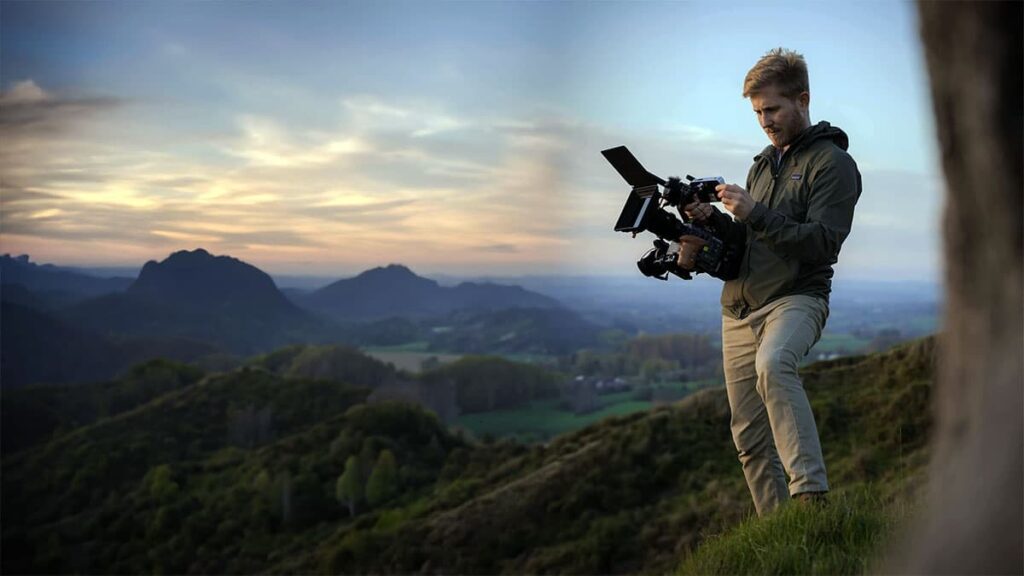
While a solo documentary filmmaker’s camera can be unnoticeable, sound is always a compromise. However, it is precisely these limitations that often shape style. Frederick Wiseman, one of the classics of observational documentary filmmaking, although he also worked with teams, always insisted on minimal intervention and a natural sound field. His approach inspired a whole generation of directors who filmed alone and accepted the imperfections of sound as part of reality.
Now, solo documentary filmmakers increasingly use special microphones and small recording devices to capture not just pure sound, but the entire atmosphere. They intentionally leave in rustling sounds, pauses, and unspoken phrases—all of which help the viewer feel as if they’re right there. Sound ceases to be merely background and begins to tell a story in its own right.
Editing as a continuation of filming
When a director shoots and edits himself, the film’s structure is born not on paper, but through living with the material. Jonathan Caouette, the director of the autobiographical film “Tarnation,” edited it almost single-handedly, compiling personal archives, video, and audio fragments into an emotionally cohesive statement. Such editing is impossible without a deep authorial presence—it’s difficult to delegate.
A similar principle is evident in Kirsten Johnson’s film “Cameraperson,” where she distilled years of her own cinematography experience into a reflective work. Here, editing is not about the logic of events, but about the author’s inner rhythm, which is especially characteristic of solo documentary filmmaking.
Production without an office
Solo documentary filmmakers rarely fit into traditional production models. They work slowly, sometimes for years, juggling filming with other work. Many projects are launched without guaranteed funding and find support only at the rough-cut stage. This is why festivals such as IDFA, Visions du Réel, and CPH:DOX have become key entry points for such films.
The industry is gradually adapting to this format: microgrants, residencies for solo creators, and flexible format requirements are emerging. This is no longer a fringe practice but a fully fledged part of the documentary landscape, even influencing streaming standards.
What Solo Documentary Filmmaking Really Changes
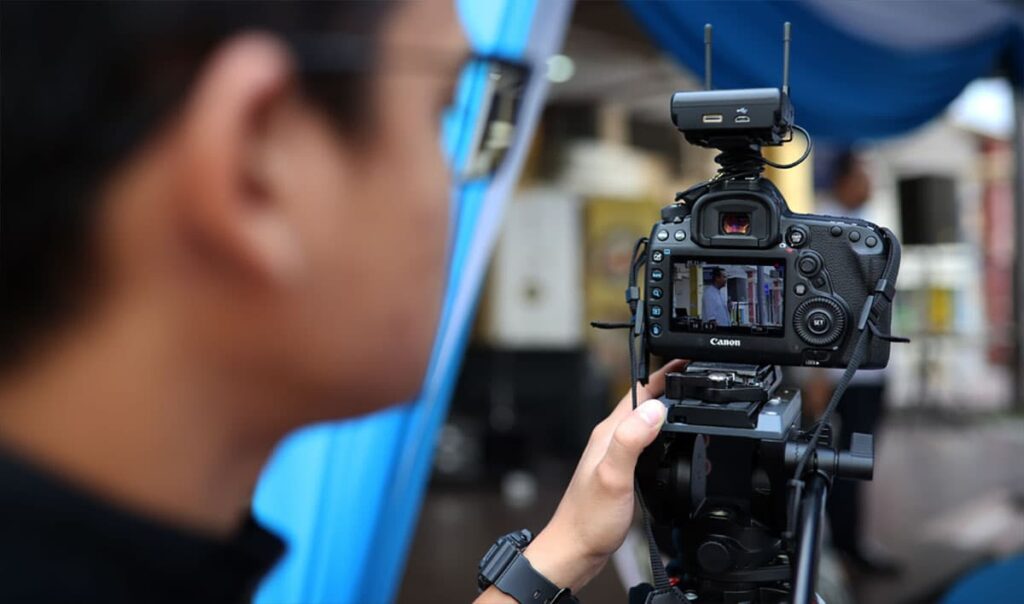
Having one person behind the camera doesn’t mean the film is less valuable. On the contrary, this approach has shifted the focus from “production” to “presence.” Solo documentarians have shown that:
- the subject’s trust develops more quickly without a crew and equipment around;
- observation is more important than a pre-written structure;
- imperfection can enhance authenticity;
- the author’s responsibility becomes absolute—it’s impossible to hide behind a crew.
This method won’t replace long-form documentaries, but it has already revolutionized audience perceptions. Documentary filmmaking today is not a dry report but an immersion in personal experience, and this is precisely its new power.
Limitations and the price of autonomy
Solo documentary filmmaking offers freedom, but it also imposes serious limitations that are rarely mentioned in rave reviews. The physical workload increases exponentially: one person is responsible for the camera, sound, logistics, data security, and their own well-being. During long shoots, this leads to fatigue, which directly impacts the quality of observation—the director begins to “miss” moments because they’re simply exhausted. The psychological pressure is also higher: there’s no team with whom to discuss doubts or share responsibility for difficult decisions.
There’s also an ethical aspect. When one person becomes the subject’s sole point of contact, the line between observation and intervention blurs more quickly. Solo documentary filmmakers must be especially careful to ensure that intimacy doesn’t degenerate into manipulation or dependency. Furthermore, autonomy complicates decision-making: there’s no one to ask awkward questions on set, no one to stop a scene if it goes beyond acceptable limits.
Finally, the autonomous format impacts distribution. Solo-made films are often more difficult to package for television standards and platform requirements. This doesn’t make them weaker, but it does require additional skills from the creator—from negotiating with programming directors to independently working with festival submissions. Solo documentary filmmaking remains a powerful tool, but it demands not only artistic courage but also a high degree of personal resilience.